
RBI MPC Meeting 5-7 October 2026: Repo Rate at 5.25%, Rate-Hike Debate and UPSC Notes
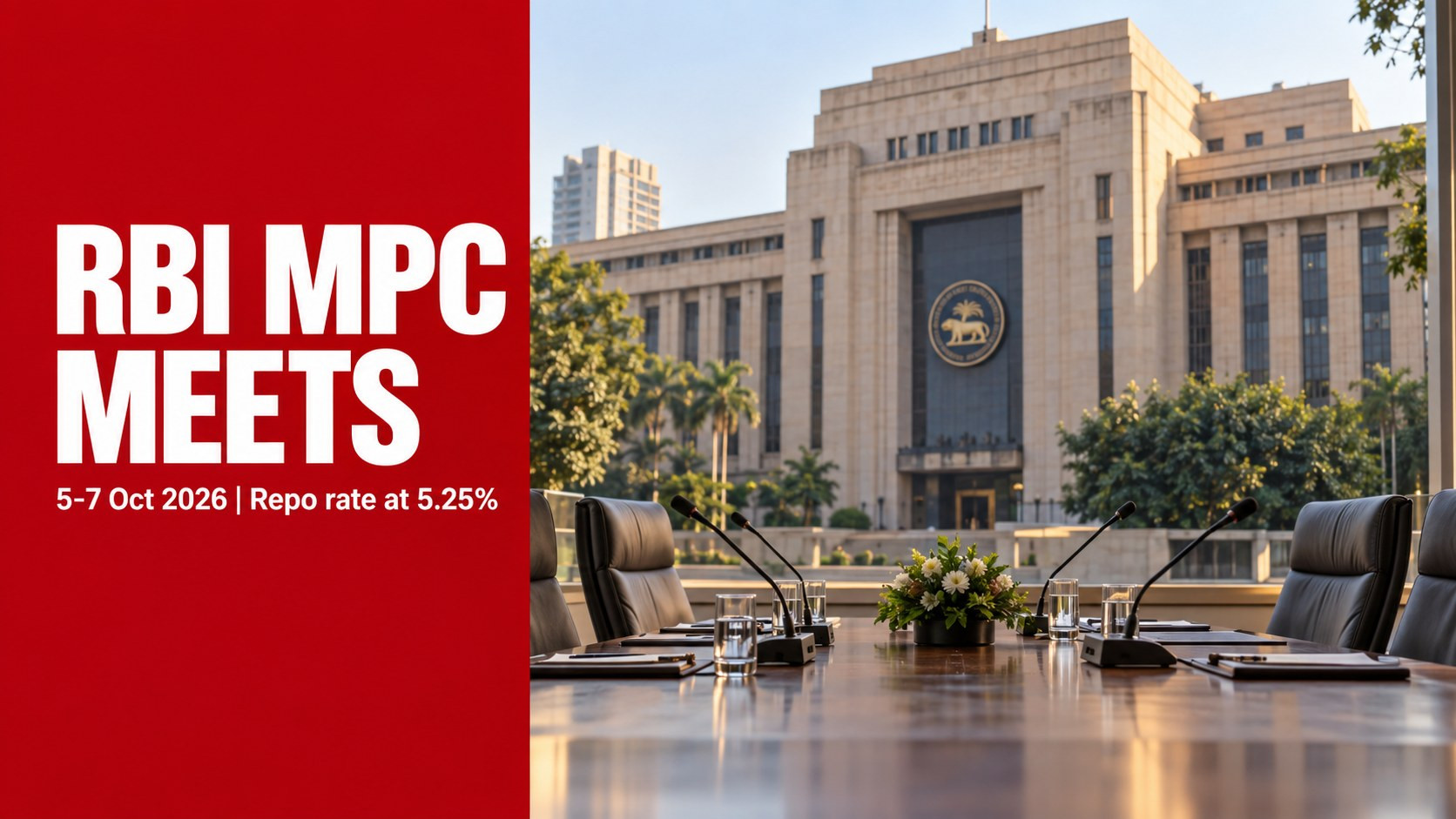
Updated: 3 October 2026 | UPSC: GS III - Indian economy, monetary policy, inflation
AI-generated illustration. Not a photograph of an actual MPC meeting.
The Reserve Bank of India's Monetary Policy Committee (MPC) meets from 5 to 7 October 2026, with the decision due on 7 October. The question is whether the RBI raises the repo rate for the first time since February 2023. Nothing is decided yet, so treat all rate predictions below as expectations, not facts.
Where policy stands (official, August 2026)
At its 3-5 August 2026 meeting, the 62nd MPC meeting, the committee voted unanimously to keep the policy repo rate unchanged and retained a neutral stance.
| Rate | Level |
|---|---|
| Policy repo rate | 5.25% |
| Standing Deposit Facility (SDF) rate | 5.00% |
| Marginal Standing Facility (MSF) rate | 5.50% |
| Bank Rate | 5.50% |
In that meeting the RBI projected CPI inflation at 5.0% for 2026-27 and real GDP growth at 6.7%. It noted that inflation had crossed the 4% target in June (4.4%) mainly because of food and fuel prices, while core inflation stayed low.
Why a hike is being discussed (press reports)
Business Standard reported on 2 October that:
- Retail inflation rose to 4.82% in August, above the 4% target for the third month in a row.
- Eight of ten economists in its poll expect a 25 basis point hike to 5.50%. A Reuters poll found about 60% expecting the same.
- The US Fed and the Bank of Japan have raised rates recently, and the rupee has weakened about 6% this year.
These are media reports and forecasts. The RBI's actual decision will be published on 7 October.
UPSC angle
- What the MPC is: A six-member statutory committee under Section 45ZB of the RBI Act, 1934, chaired by the RBI Governor. In August the members were the Governor, a Deputy Governor, an RBI Executive Director and three external members.
- Policy repo rate: The rate at which the RBI lends short-term funds to banks. It is the main signalling tool. SDF is the floor and MSF/Bank Rate the ceiling of the corridor.
- Neutral stance: The committee keeps the option of moving either way depending on data.
- Inflation targeting: The MPC's mandate is price stability with growth in mind. Food and fuel shocks are supply-side, which is why the RBI often debates whether to "look through" them.
- Trade-off for answers: A higher repo rate can cool inflation and support the rupee, but it raises borrowing costs and can slow growth.
Practice question
Mains: "Monetary policy cannot fully control supply-side inflation, yet it must anchor expectations." Discuss with reference to recent RBI policy. 150 words.
Sources
- RBI: Minutes of the MPC meeting, 3-5 August 2026
- Business Standard: RBI MPC meet from Oct 5-7, 2 October 2026
Plan your UPSC revision



.png)


Post a Comment